Beauty and Body Image in the Media
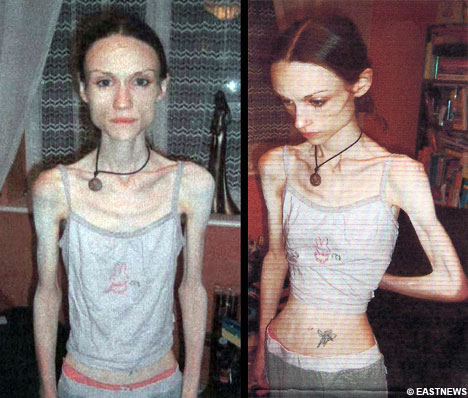
Images of female bodies are everywhere. Women—and their body parts—sell everything from food to cars. Popular film and television actresses are becoming younger, taller and thinner. Some have even been known to faint on the set from lack of food. Women’s magazines are full of articles urging that if they can just lose those last twenty pounds, they’ll have it all—the perfect marriage, loving children, great sex, and a rewarding career.
 Why are standards of beauty being imposed on women, the majority of whom are naturally larger and more mature than any of the models? The roots, some analysts say, are economic. By presenting an ideal difficult to achieve and maintain, the cosmetic and diet product industries are assured of growth and profits. And it’s no accident that youth is increasingly promoted, along with thinness, as an essential criterion of beauty. If not all women need to lose weight, for sure they’re all aging, says the Quebec Action Network for Women’s Health in its 2001 report Changements sociaux en faveur de la diversité des images corporelles. And, according to the industry, age is a disaster that needs to be dealt with.
The stakes are huge. On the one hand, women who are insecure about their bodies are more likely to buy beauty products, new clothes, and diet aids. It is estimated that the diet industry alone is worth anywhere between 40 to 100 billion (U.S.) a year selling temporary weight loss (90 to 95% of dieters regain the lost weight).1 On the other hand, research indicates that exposure to images of thin, young, air-brushed female bodies is linked to depression, loss of self-esteem and the development of unhealthy eating habits in women and girls.
 The American research group Anorexia Nervosa & Related Eating Disorders, Inc. says that one out of every four college-aged women uses unhealthy methods of weight control—including fasting, skipping meals, excessive exercise, laxative abuse, and self-induced vomiting. The pressure to be thin is also affecting young girls: the Canadian Women's Health Network warns that weight control measures are now being taken by girls as young as 5 and 6. American statistics are similar. Several studies, such as one conducted by Marika Tiggemann and Levina Clark in 2006 titled “Appearance Culture in Nine- to 12-Year-Old Girls: Media and Peer Influences on Body Dissatisfaction,” indicate that nearly half of all preadolescent girls wish to be thinner, and as a result have engaged in a diet or are aware of the concept of dieting. In 2003, Teen magazine reported that 35 per cent of girls 6 to 12 years old have been on at least one diet, and that 50 to 70 per cent of normal weight girls believe they are overweight. Overall research indicates that 90% of women are dissatisfied with their appearance in some way.
Media activist Jean Kilbourne concludes that, "Women are sold to the diet industry by the magazines we read and the television programs we watch, almost all of which make us feel anxious about our weight."
Unattainable Beauty
Perhaps most disturbing is the fact that media images of female beauty are unattainable for all but a very small number of women. Researchers generating a computer model of a woman with Barbie-doll proportions, for example, found that her back would be too weak to support the weight of her upper body, and her body would be too narrow to contain more than half a liver and a few centimeters of bowel. A real woman built that way would suffer from chronic diarrhea and eventually die from malnutrition. Jill Barad president of Mattel (which manufactures Barbie) estimated that 99% of girls aged 3 to 10 years old own at least one Barbie doll.
 Perhaps most disturbing is the fact that media images of female beauty are unattainable for all but a very small number of women. Researchers generating a computer model of a woman with Barbie-doll proportions, for example, found that her back would be too weak to support the weight of her upper body, and her body would be too narrow to contain more than half a liver and a few centimeters of bowel. A real woman built that way would suffer from chronic diarrhea and eventually die from malnutrition. Jill Barad president of Mattel (which manufactures Barbie) estimated that 99% of girls aged 3 to 10 years old own at least one Barbie doll.
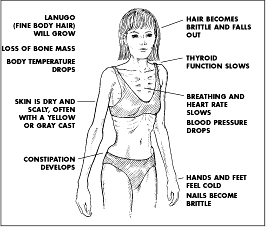
Still, the number of real life women and girls who seek a similarly underweight body is epidemic, and they can suffer equally devastating health consequences. In 2006 it was estimated that up to 450, 000 Canadian women were affected by an eating disorder.
The Culture of Thinness
Researchers report that women’s magazines have ten and one-half times more ads and articles promoting weight loss than men’s magazines do, and over three-quarters of the covers of women’s magazines include at least one message about how to change a woman’s bodily appearance—by diet, exercise or cosmetic surgery.
Television and movies reinforce the importance of a thin body as a measure of a woman’s worth. Canadian researcher Gregory Fouts reports that over three-quarters of the female characters in TV situation comedies are underweight, and only one in twenty are above average in size. Heavier actresses tend to receive negative comments from male characters about their bodies ("How about wearing a sack?"), and 80 per cent of these negative comments are followed by canned audience laughter.
 There have been efforts in the magazine industry to buck the trend. For several years the Quebec magazine Coup de Pouce has consistently included full-sized women in their fashion pages and Châtelaine has pledged not to touch up photos and not to include models less than 25 years of age. In Madrid, one of the world’s biggest fashion capitals, ultra-thin models were banned from the runway in 2006. Furthermore Spain has recently undergone a project with the aim to standardize clothing sizes through using a unique process in which a laser beam is used to measure real life women’s bodies in order to find the most true to life measurement.5
However, advertising rules the marketplace and in advertising thin is "in." Twenty years ago, the average model weighed 8 per cent less than the average woman—but today’s models weigh 23 per cent less. Advertisers believe that thin models sell products. When the Australian magazine New Woman recently included a picture of a heavy-set model on its cover, it received a truckload of letters from grateful readers praising the move. But its advertisers complained and the magazine returned to featuring bone-thin models. Advertising Age International concluded that the incident "made clear the influence wielded by advertisers who remain convinced that only thin models spur the sales of beauty products."
Another issue is the representation of ethnically diverse women in the media. A 2008 study conducted by Juanita Covert and Travis Dixon titled "A Changing View: Representation and Effects of the Portrayal of Women of Color in Mainstream Women's Magazines” found that although there was an increase in the representation of women of colour, overall white women were over represented in mainstream women’s magazines from 1999 to 2004.
Self-Improvement or Self-Destruction?
The barrage of messages about thinness, dieting and beauty tells "ordinary" women that they are always in need of adjustment—and that the female body is an object to be perfected.
Jean Kilbourne argues that the overwhelming presence of media images of painfully thin women means that real women’s bodies have become invisible in the mass media. The real tragedy, Kilbourne concludes, is that many women internalize these stereotypes, and judge themselves by the beauty industry's standards. Women learn to compare themselves to other women, and to compete with them for male attention. This focus on beauty and desirability "effectively destroys any awareness and action that might help to change that climate."
Statistics


No comments:
Post a Comment